

If your Spark jobs still line up single file behind a busy cluster, you’re paying for idle time. Modern teams need two things at once:
- the ability to submit multiple Spark jobs onto the same cluster, and
- make each job finish faster with a vectorized execution engine.
Yeedu does both: cluster-level concurrency controls to multiplex jobs, plus Turbo, a C++ vectorized engine for CPU-bound speedups without changing your Spark code. Recent coverage cites up to 4–10× performance gains and ~60% cost reductions, making this a practical path for both Spark performance and cost optimization.
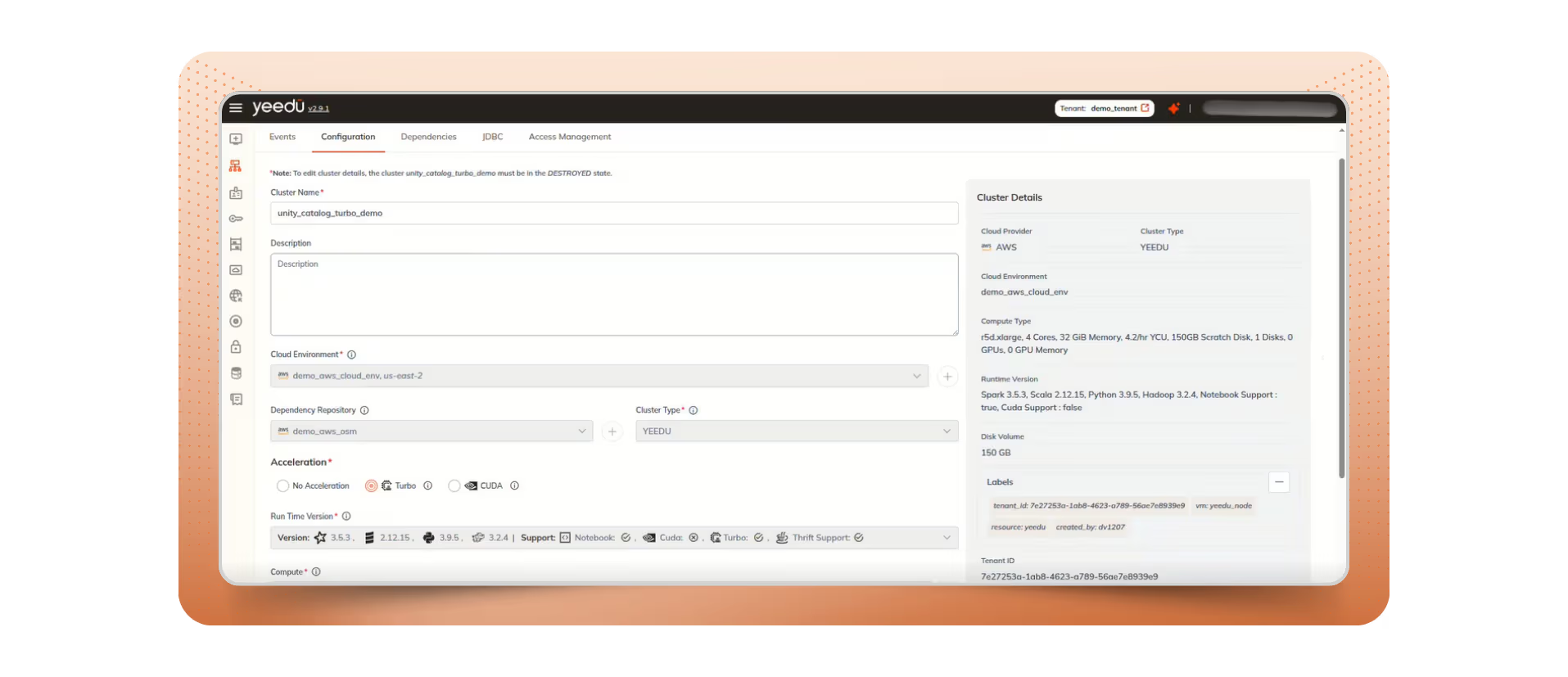
Configuration view for setting Spark runtime, compute type, and parallel execution limits.
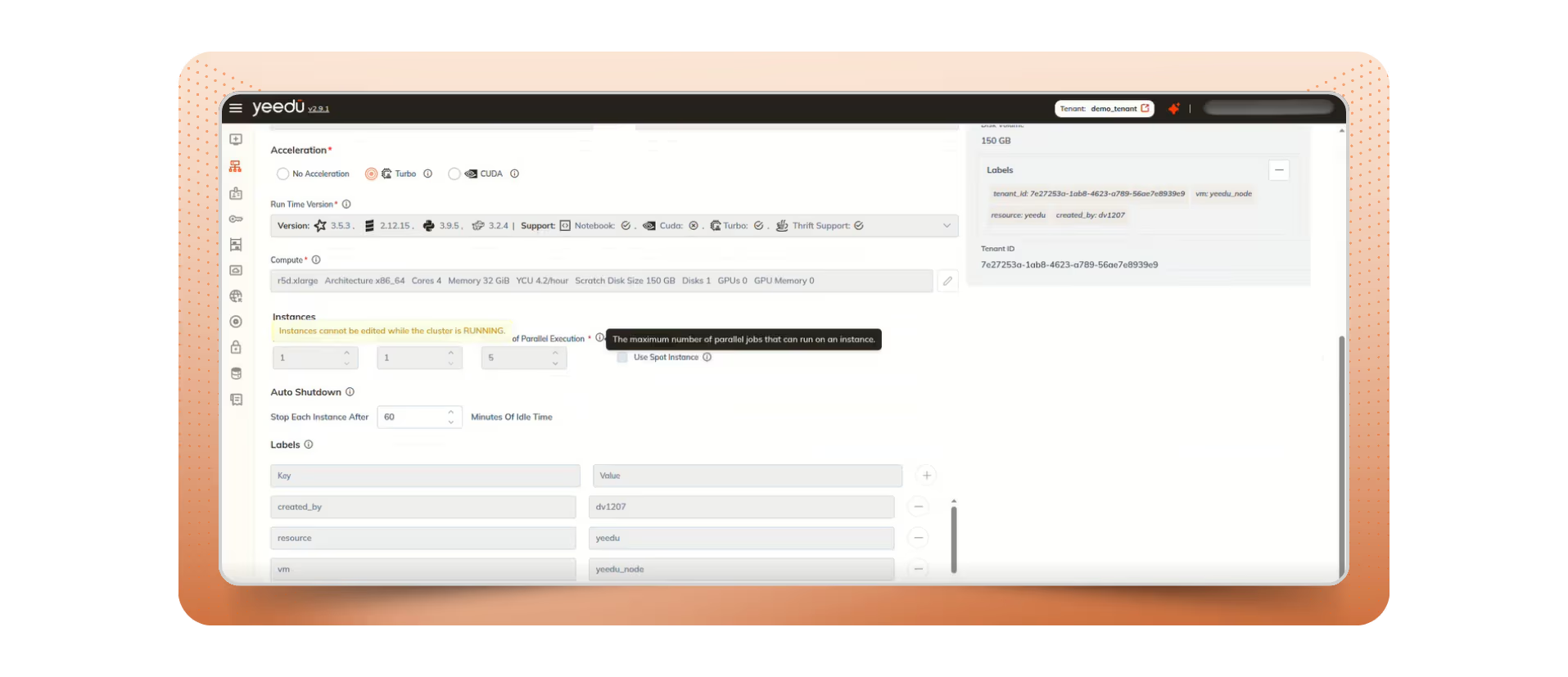
Cluster setup interface displaying cloud environment, Spark version, and compute configuration.
What “multiplexing Spark jobs” means (and why it matters)
Multiplexing is the ability to submit multiple Spark jobs and run them in parallel on one cluster (multiple drivers), instead of forcing every workload to wait behind a single long runner. In Yeedu, clusters surface a “Max parallel execution” control so you can set how many jobs run concurrently and avoid head-of-line blocking a clean operational pattern for teams that need to submit multiple Spark jobs without creating excess clusters.
Yeedu’s control plane manages clusters across AWS, GCP, and Azure, so you can point many jobs to the same target where the data and price/performance make sense without juggling three different UIs.
Docs: Architecture | Yeedu Documentation
TL;DR: Multiplexing converts a single queue into multiple lanes. Short, time-sensitive jobs no longer idle behind “whales,” and your cores spend more time doing useful work. This is the simplest, most reliable form of Spark job optimization because it reduces pipeline idle time without adding engineering overhead.
Make each job faster: a vectorized (SIMD) engine under the hood
Multiplexing lifts throughput; Turbo shortens per-job runtime. Turbo uses vectorized operators, SIMD, and cache-aware processing hardware-friendly techniques that reduce CPU cycles per row so CPU-bound Spark/SQL workloads finish dramatically faster, with zero code changes.
This has a direct impact on Spark shuffle optimization scenarios where CPU bottlenecks stall the pipeline: vectorized operators reduce shuffle-side processing time without requiring developer rewrites.
Benchmark: Accelerating Chemical Similarity with Yeedu Turbo
Quick start: from “one lane” to “many lanes”
- Choose/Configure a Cluster - Set Max parallel execution to the number of concurrent Spark apps you want for that pool. Verify autoscaling limits and idle timeout to avoid over-/under-provisioning.
- Wire Airflow - Install the operator and switch existing DAG steps to use it for job/notebook submission and status checks.
- Point multiple jobs to the same cluster - Use Yeedu’s Jobs UI/CLI to target your multiplexed cluster and observe throughput improvements as short jobs no longer wait behind large runs. This is where many teams see dramatic improvement in Spark job optimization across mixed workloads.
- Measure & iterate - Track queue time, runtime, and success rates in Yeedu’s monitoring views (stdout/stderr, job states). Increase or decrease parallel execution as needed. Video: Monitoring Jobs and Clusters in Yeedu
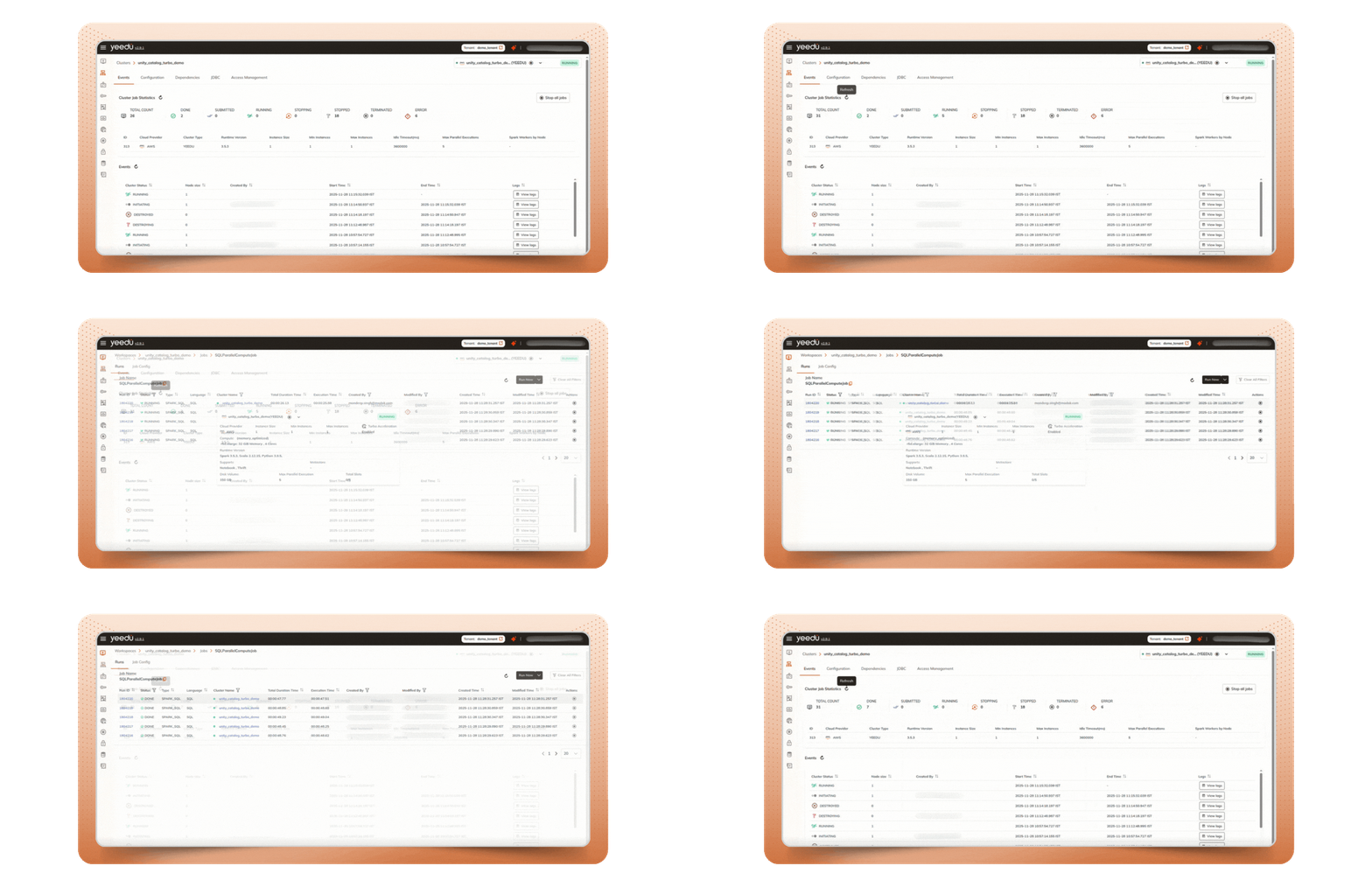
Yeedu’s unified cluster dashboard showing live Spark job states and operational metrics.
Sizing tips & guardrails
- Start conservative, then raise - Begin with a modest parallel setting; observe CPU/memory headroom and I/O pressure, then increase. (You can keep different clusters for different concurrency profiles.)
- Mix workloads wisely - Give extremely heavy shuffle jobs their own lane/cluster if they starve others; keep a multiplexed “fast lane” for short jobs. This naturally supports Spark shuffle optimization and stability.
- Leverage the control plane - Centralize clusters by cloud/region/workspace to balance data gravity and price/performance without operational sprawl. Yeedu Architecture Overview Documentation
What you should expect to see
- Less waiting: Queue time collapses as N jobs run in parallel rather than serially - exactly what teams want when they submit multiple Spark jobs instead of serializing work.
- Lower wall-clock: Turbo’s vectorized engine reduces per-job CPU time, compounding multiplexing gains.
- Lower spend: Same (or more) work in less time with higher utilization; external coverage cites ~60% cost reductions and 4–10× performance improvements. This is the most direct path to enterprise-grade Spark cost optimization.
Further reading
Wrap-up
If you’re still shipping Spark jobs through a single lane, you’re leaving performance and money on the table. Multiplexing gives you more lanes; a vectorized engine makes every lane faster. With Yeedu’s cluster-level Max parallel execution, multi-cloud control plane, and Airflow/UI/CLI monitoring, you can submit multiple Spark jobs, wait less, and pay less while achieving meaningful Spark performance optimization without rewriting your pipelines.