
We did the stress test, so that you don't have to.
Traditional Spark Engine Vs Turbo Rearchitected Spark Engine
We put Yeedu's rearchitected Spark Turbo Engine head-to-head against traditional Spark used in leading data platforms. The performance gap isn't close.
System Descriptions
In order to put the rearchitected Spark Turbo Engine at a disadvantage, and push it to its extremes, we used some of the most efficient data platforms that use native Spark engines.
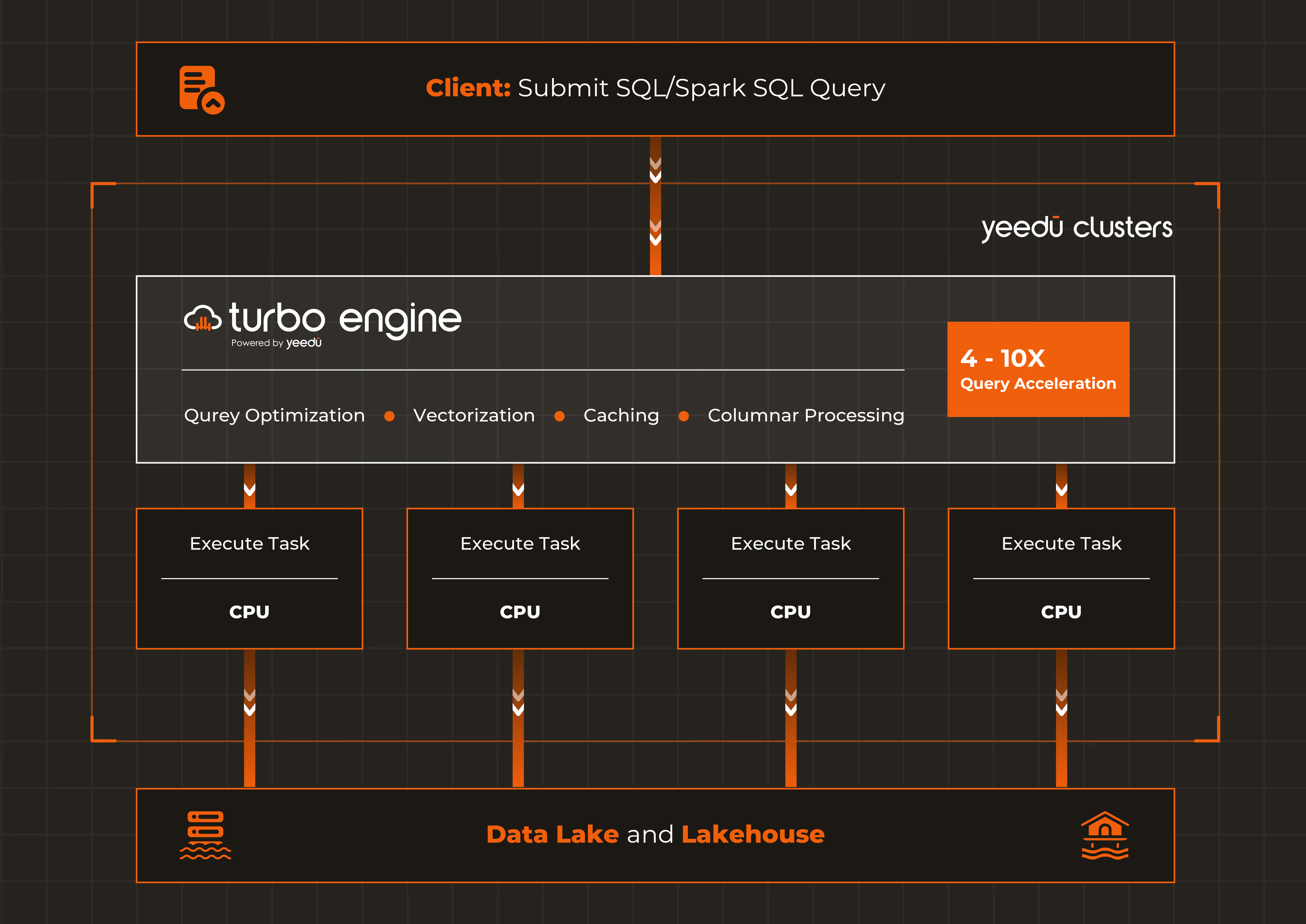
Yeedu Turbo Engine
Yeedu's Turbo Engine is a rearchitected Spark execution engine engineered to improve Spark performance, maximize speed, and cost efficiency. It is designed to be used without changing your code or migrating data, and to eliminate common Spark performance issues.
Key Capabilities
- Zero Code Refactoring: No Spark pipeline changes required
- Query Plan Rewriting: Reorders execution DAGs for minimal latency
- SIMD-Based Vector Execution: Parallel data path processing for higher CPU throughput
- Columnar Data Access: Bypasses row-level overhead by operating on typed column vectors
- Cache-Aware Execution: Optimized use of CPU L1/L2/L3 caches to reduce I/O wait cycles
- Smart Scheduling: Dynamic allocation of CPU threads across concurrent workloads
- Multitenant Execution Engine: Runs high-volume parallel jobs with stable latency under load
Traditional Spark Engines
Most data platforms still rely on traditional general-purpose Spark engines: the default open-source Spark runtime, which is powerful but not designed to optimize for modern cloud hardware or extreme concurrency.
Typical Characteristics
- Row-Oriented Processing: Operates record-by-record, increasing memory pressure and I/O
- Minimal SIMD Utilization: Misses modern CPU-level parallelism
- Garbage Collection Overhead: JVM-managed memory creates unpredictable latency under load
- Manual Performance Tuning: Requires developer intervention to sustain performance
- Poor Idle-Time Recovery: CPUs remain underutilized during I/O-bound stages
- Retry Amplification at Scale: Higher failure rates under high concurrency and data skew
- Cost Drift: Prolonged job execution translates to unpredictable billing across compute layers
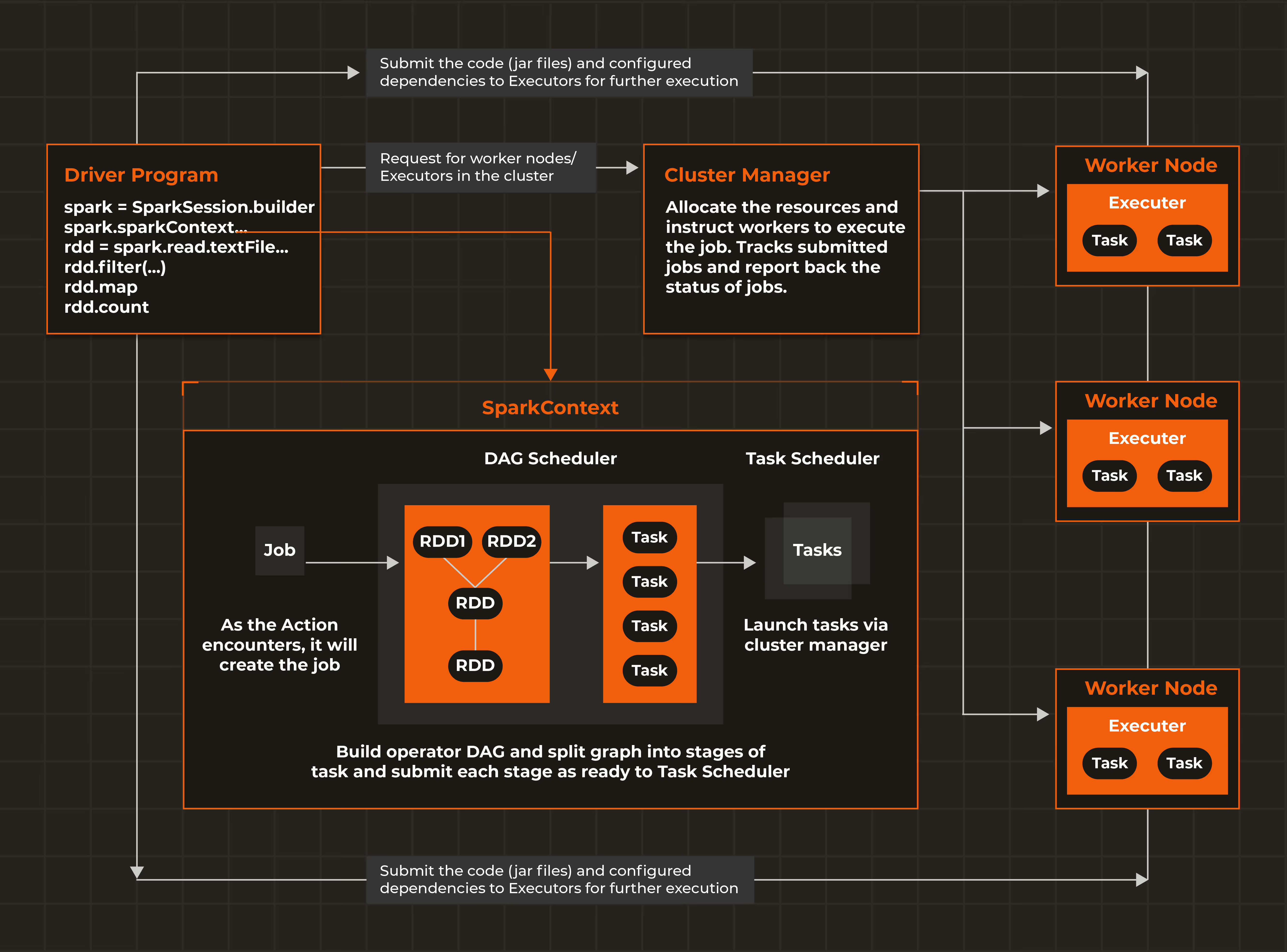
Key Observations
Under Load
The stress test revealed clear, repeatable differences between Yeedu's Turbo Engine and traditional Spark runtimes across the benchmarks.
Execution Time
Turbo Engine delivered 4x-10x faster runtimes depending on query type and your chosen metastore.
Concurrency Stability
Maintained low latency under 50+ concurrent jobs; traditional engines experienced retries and degraded throughput.
Cost Efficiency
Yeedu's resource utilization translated to 60-80% lower compute costs, even without tuning.
Operational Simplicity
With Yeedu, setup was frictionless. No configuration branching, no dependency management, no data movement.
Rearchitected Vs Traditional Spark Stress Test
The commonly used dataset, the New York City Yellow Cabs, was used for the stress test to standardize the dataset and results.
A large-scale, publicly available dataset - New York City Yellow Cabs trips - was used to standardize results across systems.
- Format: Native Parquet (no Delta or proprietary enhancements)
- Volume: 1.57 billion rows
- Size: ~53 GB
- Storage: Placed in object stores (AWS S3)
- Machine Configuration: r5d.xlarge - 4 Cores, Memory 32 GiB
This setup mimics a realistic enterprise scenario: high-volume, semi-structured data already resident in cloud storage which requires high Spark performance on shared infrastructure.
Ready to benchmark Turbo Engine on your real workloads?
Benchmark your real-world Spark workloads in your own cloud environment with a 30-day proof of concept.