
See everything, everywhere - Yeedu’s multi-cloud logging brings transparency across clouds.
The 3 AM Problem Every Data Engineer Knows
It’s 3 AM. Your production pipeline just failed. You’re managing workloads across AWS, Azure, and GCP.
You scan your job logs and metrics nothing stands out. You dive into the logs - only to realize they are missing.
- Your Spark cluster on AWS? Critical Spark job logs are missing.
- Azure resource activity? Practically invisible due to broken cloud audit logging trails.
- And the job failures you know happened? There’s no trace of them anywhere.
The logs you need simply aren’t there.
Not because of a system crash. But because log forwarding wasn’t set up correctly. Or it silently broke. Or someone assumed another team was handling it as part of multi-cloud log management.
This is the reality in most multi-cloud environments: logging isn’t just fragmented it’s missing. Entire categories of telemetry go uncollected, undermining multi-cloud observability and slowing response times. Engineers burn hours trying to patch together what should have been captured automatically.
Yeedu solves this at the source. Logs are streamed natively to each cloud’s observability system automatically, consistently, and completely creating unified cloud logging without brittle pipelines. No blind spots. No surprises at 3 AM.
H3: The Real Cost of Fragmented Visibility
- Incident Response: Engineers waste 15-40% of troubleshooting time just locating relevant logs across disconnected multi-cloud logging systems.
- Compliance Audits: Security teams manually correlate access logs due to inconsistent cloud audit logging formats, retention policies, and acess controls.
- Cost Optimization: Finance teams receive fragmented reports because multi-cloud monitoring data cannot be easily normalized or aggregated.
- Trust Erosion: When visibility feels incomplete, confidence in the platform and in multi-cloud governance starts to deteriorate.
These aren’t theoretical concerns. They’re the daily reality for enterprises running serious multi-cloud data infrastructure. And they compound over time.
H3: How Yeedu Delivers Universal Transparency
When Yeedu orchestrates a data workload whether it’s spinning up transient compute clusters on GCP or moving data to ADLS multi-cloud observability is built in by default.
Comprehensive log stream automatically into each cloud’s native monitoring system.
- No additional configuration.
- No log forwarding pipelines to maintain.
- No gaps in coverage.
An Apache Spark job in AWS? Complete execution logs in cloud cluster bootstrap logs, error traces, everything your team needs.
The same platform managing Azure resources? Identical detail flows into Log Analytics, ready for Kusto queries (kql).
Operations in Google Cloud? Full transparency in Stackdriver.
One platform. Three clouds. Complete visibility everywhere.
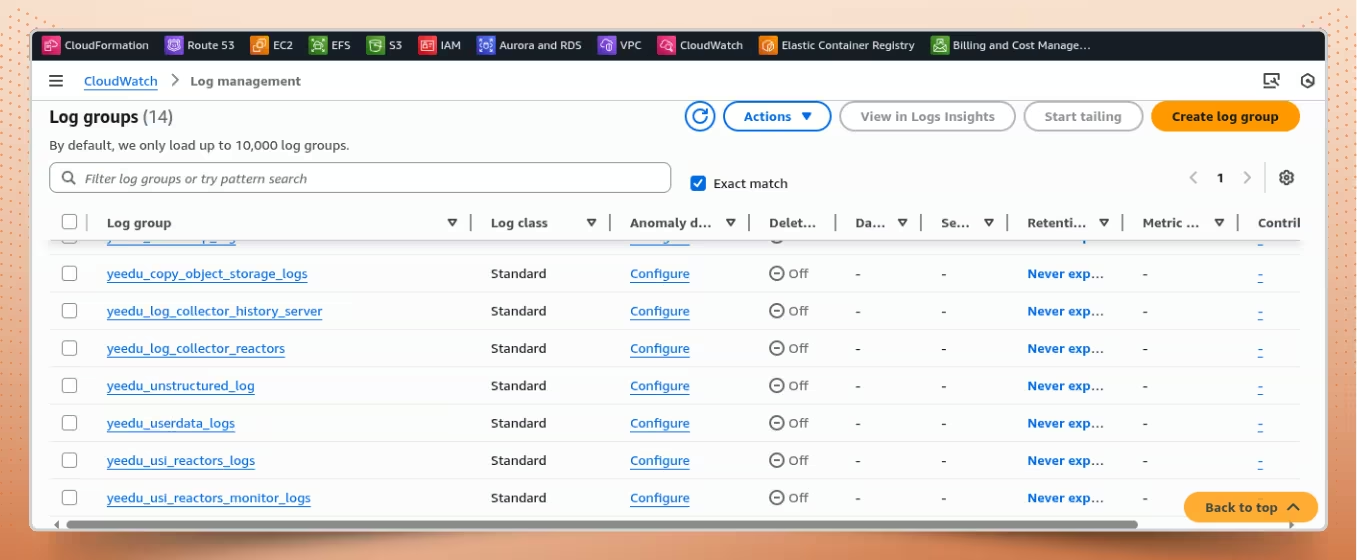
AWS Log Groups
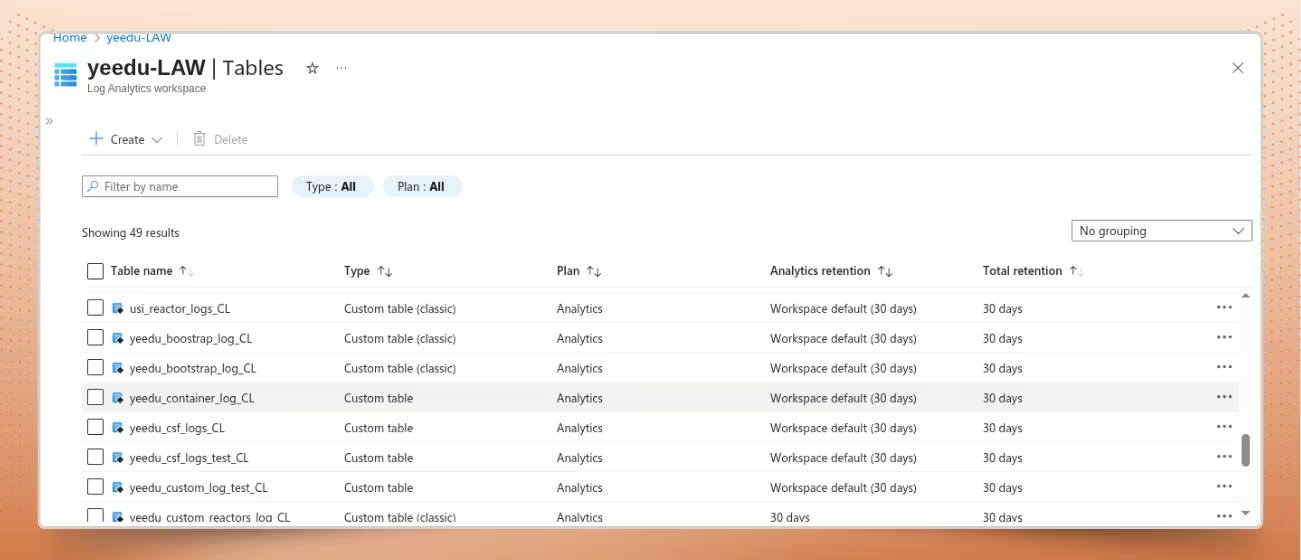
Logs in Azure
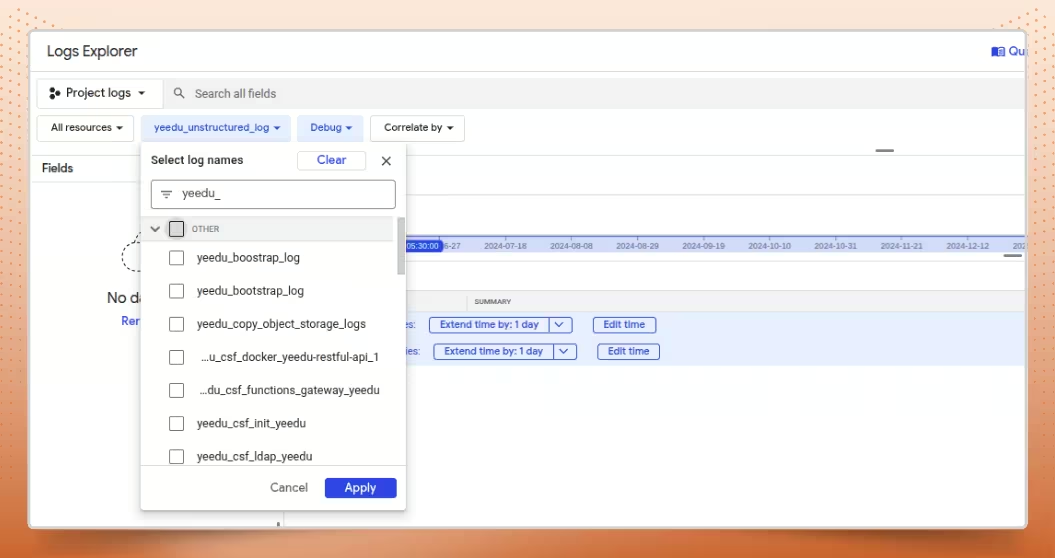
GCP logs explorer
Business Outcomes That Actually Matter
- Faster Incident Resolution Mean time to resolution drops by 40-60% when engineers troubleshoot within familiar tools backed by complete multi-cloud observability data.
- Stronger SLA Adherence Consistent multi-cloud logging ensures issues are detected and resolved before they impact downstream consumers.
- Audit-Ready Governance Compliance officers access end-to-end cloud audit logging through enterprise-standard logging systems with established retention and access controls.
- Strategic Flexibility Workloads move between clouds without rebuilding multi-cloud monitoring infrastructure. Observability simply follows the work.
- Cost Accountability Every dollar spent on compute correlates with detailed Spark job logs showing exactly what ran, when, and why.
The Strategic Advantage: Eliminating Cloud Silos
Multi-cloud isn’t going away. If anything, enterprises are becoming more intentionally distributed selecting the best cloud for each workload, negotiating better commercial terms through provider diversity, building resilience through geographic distribution.
The question isn’t whether you’ll operate across clouds. It’s whether your multi-cloud governance model can keep up.
Yeedu’s multi-cloud logging architecture positions organizations to operate across clouds without operational compromise. When observability remains consistent regardless of where workloads execute, several strategic capabilities emerge:
- Cross-cloud collaboration becomes practical. Teams share knowledge more easily through unified cloud logging practices.
- Talent deployment becomes flexible. Engineers can work across clouds without relearning observability fundamentals.
- Regulatory compliance becomes manageable. Consistent cloud audit logging patterns make compliance manageable even as workloads span jurisdictions.
- Platform trust becomes universal. Complete multi-cloud observability builds confidence across the organization from data scientists to compliance officers to executive leadership.
The Yeedu Difference
Multi-cloud observability isn’t a feature checkbox for Yeedu. It’s an architectural principle that reflects a deep understanding of how enterprises operate at a scale. While traditional platforms create visibility gaps across clouds, Yeedu embeds multi-cloud log managment directly into how workloads are orchestrated.
This isn’t just better monitoring. It’s a fundamentally different approach to multi-cloud data operations.
For enterprises serious about multi-cloud success organizations that demand operational excellence, governance confidence, and strategic flexibility Yeedu delivers observability that matches the complexity of modern data infrastructure.
Conclusion
Enterprises don’t need another log aggregator they need unified cloud logging they can trust.
By streaming logs natively into Stackdriver, CloudWatch, and Log Analytics, Yeedu delivers multi-cloud logging, strengthens cloud audit logging, and enables scalable multi-cloud governance without extra pipelines or rewrites.
If multi-cloud is your strategy, observability must be universal. Yeedu makes that operational today.